
The increase in rodent activity according to what BPCA members have reported is an increase of 51%.
With restaurants across Britain being forced to close as part of the lockdown measures to try and stop the spread of Corona virus. Rodents have been forced to look elsewhere for a food source.
The BPCA has claimed that around half of the professionals polled since the introduction of the lockdown measures have seen an increase in activity.
The visibility of rats is particularly growing in populated areas, with less footfall across cities having a direct affect on the amount of food available in bins and on the floor. The rat populations is moving further afield in order to deal with their need for food and to try to find a new source of food and this in turn, is obviously likely to cause more sightings.
Given the current colder weather that the UK is, experiencing the result will be that rats and mice are driven to seek shelter and a food source indoors. Therefore, the importance of good pest control is paramount to ensure that an infestation does not occur.
Rats and mice do not hibernate and as a result, are a problem all year round and without good pest control in place it is quite possible that following the lifting of lockdown restrictions businesses will be faced with a rodent infestation to deal with.
Classed as an essential service, NPC Pest Prevention Solutions have been working tirelessly through the pandemic ensuring a professional pest control service is supplied to all of our clients’. Some clients’ are currently in lockdown and special arrangements have therefore been made to gain access to their premises to ensure continuity of the pest control service.
Obviously, for businesses that have had to close, certain precautions should be put in place to assist their regular pest control contractor. As part of these precautions good housekeeping as prevention is always the first consideration. Good proofing to all egress areas for rodents, remembering that a rodent can gain access through any gap that a pen would fit through is imperative. In addition, storing foodstuffs appropriately and ensuring good cleaning and hygiene processes are in place.
It is important to ensure that your pest control company knows of any changes to access to your premises. This is in order that they can perform all routine checks and maintenance of equipment, including bait stations. By employing the services of a professional pest control company such as NPC Pest Prevention Solutions, advice will be provided both during lockdown and when lockdown measures are lifted and businesses are preparing to trade.
If you suspect you have a rodent problem and would like expert advice or a free survey from NPC Pest Prevention Solutions. Please contact NPC Pest Prevention Solutions today:-
NPC Nottinghamshire 0115 9872968
NPC Derbyshire 0845 0754866
NPC Leicestershire 0116 2867210
NPC National 0115 9872968

2020 has proved to be a very difficult year for so many and all the team here at NPC would like to add, that we hope 2021 will be a really Happy New Year for everyone!
Take care, stay safe and here’s to 2021!
]]>Mice can be identified by their pointed nose, small round ears and long almost hairless tail that can grow as long as their body.
The signs of a mouse infestation, apart from possibly hearing scratching, will be droppings (50 to 80 droppings a night), gnawed plastic or furniture, sometimes a mouse will be seen or possibly you may notice their tracks. You may also see grease marks left by mice, as their bodies brush up against walls in your home or work premises. With respect to house mice they do also emit a musky odour.
Whilst mice do have very good hearing and a good sense of smell, they have very poor eyesight. Therefore, mice use their whiskers to help feel the surfaces they are walking along and in addition to sense changes in temperature.
Mice are mainly nocturnal, and in addition, mice tend to build their nests close to a source of food. The building of nests close to a source of food may be explained by the fact that mice eat 15 – 20 times a day. Tending only to travel up to 8 m from their nests to find food.
Unfortunately mice, as mentioned in previous posts, can cause extensive damage with their gnawing, nest building and defecation. In addition mice have been known to spread disease through their urine, droppings and bedding. Such diseases as Salmonella and Listeria can be spread to humans.
If you believe that your home or business has a rodent issue, contact NPC and one of our fully trained Surveyors will undertake a survey for you. These surveys are undertaken free of charge and without obligation.
Here at NPC all of our service staff are fully trained to BPCA standards and we would welcome the opportunity of working with you to resolve any rodent issues you may have.
NPC Limited cover Derby, Leicester, Nottingham, indeed the whole of the East and West Midlands.
To organise a free, no obligation survey, please contact NPC Limited on one of the following numbers:-
NPC Nottingham 0115 987 2968
NPC Derby 0845 075 4866
NPC Leicester 0116 286 7210
NPC East Midlands, West Midlands, Yorkshire 0115 987 2968
]]>It is important when reviewing proofing that not just ground floor level is reviewed but upper areas to property. Rodents are experts at finding egress points and rats are extremely good climbers. This is where a professional pest control Surveyor comes into their own. Experts at identifying where to proof and how to proof with the appropriate products being used.

Proofing Issues to Roller Shutter Door
The above image gives a good example of a point of egress for rodents, to an area near a roller shutter door.
NPC Surveyors are trained in identifying areas of egress for rodents, it is extremely important to have the knowledge of the target pest and exactly how the target pest is accessing the building. This in turn leads to successful pest control.
In the past, we have discussed the cost of damage caused by rodents, added to that the risks to health from a rodent infestation. We are unable to stress how important it is to take action as the colder weather approaches. Should you have an ongoing rodent issue, or feel that you would like a professional survey of your property to avoid the potential cost from rodent activity. Contact NPC Pest Prevention Solutions and one of our trained Surveyors will be happy to advise NPC Surveyors will provide a survey and recommendations which are undertaken totally free of charge or obligation:-
NPC Nottinghamshire 0115 9872968
NPC Derbyshire 0845 0754866
NPC Leicestershire 0116 2867210
NPC National 0115 9872968
In fact, if there is a gap large enough to push a pencil or pen through, then rodents will be more than able to access your premises. These areas will form a good egress point when rodents are looking around for harbourage.
Proofing your premises can save thousands of pounds, by avoiding the damage that rodents can cause once inside your premises. From chewing electrical wires to contaminating foodstuff. The price can be very hefty, and therefore, now is the time to survey your premises for any proofing work required. As the colder weather arrives rodents will be looking for harbourage.
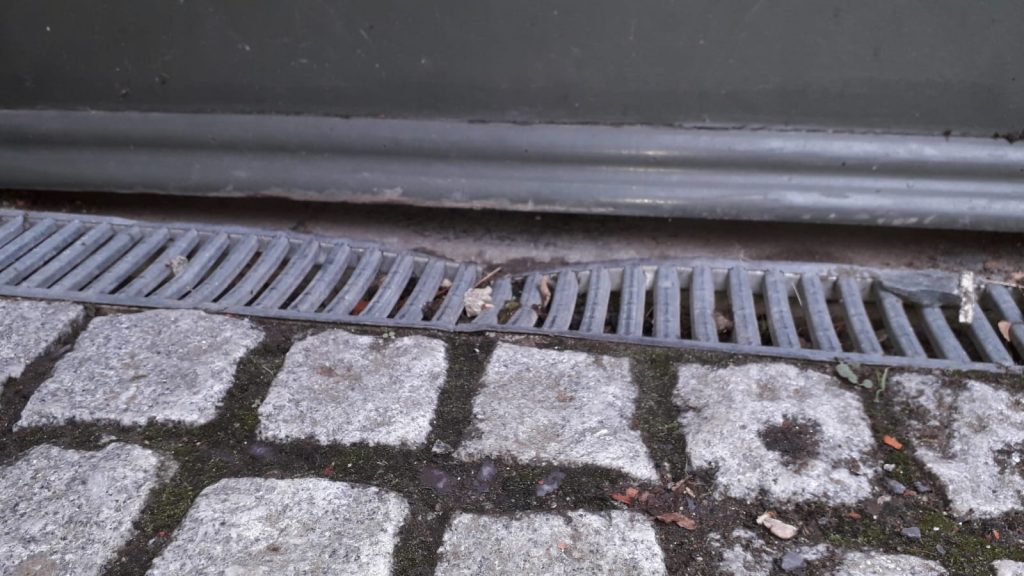
The image above shows quite clearly a point of egress for rodents and obviously requires proofing to ensure rodent activity is kept at bay.

If no gap is present then egress has been blocked to rodents and their search will continue for harbourage elsewhere.
NPC undertake proofing surveys totally free of charge. These are undertaken by our fully trained pest control surveyors’. The NPC surveyors’ are able to advise on the best and most cost effective methods of proofing your premises.
NPC works across the whole of the East and West Midlands together with Yorkshire, with an experienced team of Technicians, Surveyors, Field Biologists all backed up by service and administrative personnel. At NPC we are proud to say that our reputation and safety record is second to none.
If you suspect you have a rodent problem and would like advice or a free survey from NPC Pest Prevention Solutions. Please contact us today:-
NPC Nottinghamshire 0115 9872968
NPC Derbyshire 0845 0754866
NPC Leicestershire 0116 2867210
NPC National 0115 9872968
The problems caused by rodents can range but obviously can sometimes be extremely dangerous, especially when they decide to gnaw through electrical cables, gas or water pipes.
Prevention is always the first consideration and certainly proofing your premises against rodent egress is a wise course of action. Proofing against rodents can ultimately save a considerable amount of money.
NPC undertake proofing surveys and all surveys are undertaken totally free of charge by our fully trained pest control surveyors. The NPC surveyors are able to advise on the best and most cost effective methods of proofing your premises.
NPC works across the whole of the East Midlands and West Midlands together with Yorkshire, with an experienced team of Technicians, Surveyors, Field Biologists, all backed by support from the administration and management teams.
If you suspect you have a rodent problem and would like advice or a free survey from NPC Pest Prevention Solutions. Please contact us:-
NPC Nottinghamshire 0115 9872968
NPC Derbyshire 0845 0754866
NPC Leicestershire 0116 2867210
NPC National 0115 9872968

Unfortunately Ross accidentally disturbed a wasp nest when accessing a loft space. The resulting wasp attack resulted in Ross having to seek medical attention. He later reportedly told his followers to “Be careful of those critters.”
If you do believe that you have wasp activity at your property, the advised course of action is to call in a professional pest control company and not to try and deal with a nest yourself.
Unfortunately, whilst wasp activity tends to be at it’s height in summer, the wasp is more likely to sting in the autumn. With a shortage of food in the autumn, they are desperately seeking a food source. Often as a result they will be attracted to anything sweet and this will include such things as fizzy drinks. Likewise, the wasp can become more aggressive as they eat rotten fermenting fruit and in effect “become drunk.”
Obviously, if you happen to be within reach of their nest, they will try to defend it and you will inevitably get stung. Therefore try to avoid disturbing or coming within close proximity of a wasp nest.
How you react to wasps can also make a big difference. Reacting in panic by flapping your arms and screaming is a course of action that will make the wasp angry and more likely to sting. However, by keeping calm and just leaving them alone is the best course of action if you want to avoid being stung.
If you should have a problem with wasps at your premises, please contact NPC on one of the following numbers:-
NPC Nottinghamshire 0115 9872968
NPC Derbyshire 0845 0754866
NPC Leicestershire 0116 2867210
NPC National 0115 9872968

Wasp with a Fruit Fly
Whilst the term “flying insects” includes the wasp and hornet. It could be said that this term covers almost all insects at some stage of their life cycle.

Wasp Nest
There are many, many, types of flying insects. However, those that are generally regarded as pests will spread disease through contamination, cause physical damage; and are regarded as a nuisance pest.
Flies are the insects most associated with the spread of disease and it is therefore critical that control measures are put in place. The correct management of flying insect issues and the correct procedures to eradicate them can assist in managing the problem.
As part of advising and instigating control measures it is important to have knowledge of the biology and behaviour of the flies requiring control. Therefore it is necessary to undertake a survey to correctly identify the species that is to be controlled. As part of this survey the life cycle and in addition pointing a vulnerable stage for control is taken into account where it is identified by the NPC Surveyor that control action is required following identification.
The use of monitoring traps indicates the extent and age of an infestation as well as the type. Therefore if a fly infestation is apparent the vulnerable stage for a control strategy would be the larval stage and the adult stage.
During the laval stage, the use of an appropriate chemical to treat the feeding site is critical. It is imperative to use the correct clearance for control and care has to be taken that no contamination will occur in the surrounding areas and especially the possible contamination of the groundwater.
With respect to adult flies, these can be controlled by either chemical treatment or by the use of physical measures.
Following survey and depending on the premises, type and size of the infestation, rather than using chemical methods of treatment it may be decided that physical measures are more appropriate. The areas surveyed will also be thoroughly checked to ensure that no protected species such as bats are present..
Physical measures include prevention of entry into the premises concerned and the use of fly screens to both door and window areas can be a really effective method of control. During the survey the NPC qualified surveyor will ensure that the screens fit the areas concerned perfectly.
The second method is trapping. Fly traps that use ultraviolet (UVA) light can be extremely effective. The light attracts the flying insect and there are numerous makes and models available from NPC
If you should have an issue with flying insects please contact Nottingham Pest Control (NPC) for a free of charge no obligation survey and quotation:-
NPC Nottinghamshire 0115 9872968
NPC Derbyshire 0845 0754866
NPC Leicestershire 0116 2867210
NPC National 0115 9872968

When comparing the wasp to the hornet the first obvious tell tale sign is the size. The above image clearly shows the smaller wasp and the approximate size ratio to the hornet.
It is thought that there are probably more than a hundred thousand different types of wasp and new species are still being discovered. Wasps, just like bees and hornets, have stingers for self-defence. Wasps are carnivores and use their stingers to both kill and lay their eggs inside their prey. Fortunately, the wasp does not view the human as prey. However, it does mean that wasps can sting more than once and therefore wasp nests should not be disturbed. The wasps stinger contains a venom that is transferred to humans during a sting and can be extremely painful. Unfortunately some people may have a severe allergic reaction to wasp stings (anaphylaxis following a wasp sting) and in these cases emergency medical care should be sought.
Wasps make their nests out of small pieces of wood they chew the small pieces of wood to a pulp, they then spit this out and build their nests with it.
Hornets are specific types of wasp and whilst the hornet is much larger than the wasp (as can be seen in the image taken of a wasp and a hornet side by side) they tend to be less aggressive if unprovoked. However, should you receive a sting from a hornet it is much more painful than a wasp sting. This is due to the chemicals found in the hornet venom. Once again hornets can sting repeatedly, they do not die after stinging (the same as the wasp) as their stingers are not pulled out of their bodies.
Apart from the size another way to distinguish the wasp from the hornet is their colouring. The hornet has brown, red and yellowish-orange markings with a little black on the body. The hornet can actually grow to approximately 5.5 cm.
As with many insects, hornets and wasps have complete life cycles consisting of four stages. Firstly, the egg and then the larva, pupa and lastly the adult. The larva is a legless grub reared within cells in the nest. Hornets feed on other insects, particularly filth flies and blow flies. Wasps feed on flies, aphids, caterpillars and other invertebrates.
With respect to wasp or hornets nests, the advice would always be, not to touch or try to treat these unless you are a pest control expert. Nottingham Pest Control (NPC) are experts at dealing with wasps and hornets and providing advice. If you feel you have a wasp issue contact NPC today:-
NPC Nottinghamshire 0115 9872968
NPC Derbyshire 0845 0754866
NPC Leicestershire 0116 2867210
NPC National 0115 9872968

Photograph of a Pipistrelle Bat Unusually Seen During Daylight Hours
The Wildlife and Countryside Act 1981 provides protection for all species of bat found in the United Kingdom. It is illegal to kill, or even disturb, bats in their roost.
This Pipistrelle bat was unusually seen during daylight hours on an outside wall. Fortunately, the bat did not appear to be injured and was left alone and eventually, once darkness came, the bat flew away. It is important to remember, as mentioned, that bats are a protected species and should always be left alone. Should ever a grounded or injured bat be found, contact should be made with the Bat Conservation Trust for their advice and the National Bat Helpline is www.bats.org.uk
Unfortunately as their natural habitats have been lost, bats have come to rely on buildings for shelter. Often bats will roost in houses, however they do not nibble or gnaw and therefore do not cause any damage to wires, insulation or wood. They do however eat insects and are a great form of natural pest control.
Therefore if you should find bats roosting in your loft space, remember bats are not rodents. They do not build nests and because of this they do not bring either insect prey or bedding material into the roost. In the UK bat droppings are dry and just crumble away to dust and there are no known health risks associated with bat droppings. Due to the fact that female bats tend to have only one baby a year, properties do not become infested. If bats are present and there is the slightest possibility of them being disturbed, you should always consult as mentioned the National Bat Helpline
Due to the fact that rabies can only be transmitted from an infected bat by a bite or a scratch and cannot be transmitted through urine or faeces. The risk of rabies from UK bats is extremely small, especially as mentioned bats should never be disturbed or handled.
Bats are clean and sociable animals and spend many hours grooming themselves.
There are three difference species of the Pipistrelle bat. The common pipistrelle, the soprano pipistrelle and the rarer Nathusius pipistrelle.
Pipistrelles are the most common of all British bats. It is amazing to think that a pipistrelle bat weighs about the same as a twenty pence piece (approximately 5 grams). They emerge at night and usually travel for up to five kilometres whilst hunting for food. These bats feed on small flying insects, with a single pipistrelle eating up to 3,000 gnats in one night.
The maximum life span recorded is eleven years’. However, normally the Pipistrelle bat lives for four to five years.
For those interested in trying to spot bats, the best time is between May and September. Bats begin to hibernate from October and therefore to try and see them out flying the best time is the summer months’. The first half hour after sunset is the time most likely to see them.
The National Trust are at the forefront of bat conservation in the UK and provide information on their web site of the old buildings and houses which they care for and which are ideal roosting sites for bats.
For pest control advice and free, no obligation surveys, please contact Nottingham Pest Control:-
Nottinghamshire 0115 9872968
Derbyshire 0845 0754866
Leicestershire 0116 2867210
National 0115 9872968